
Mendocino Water Towers
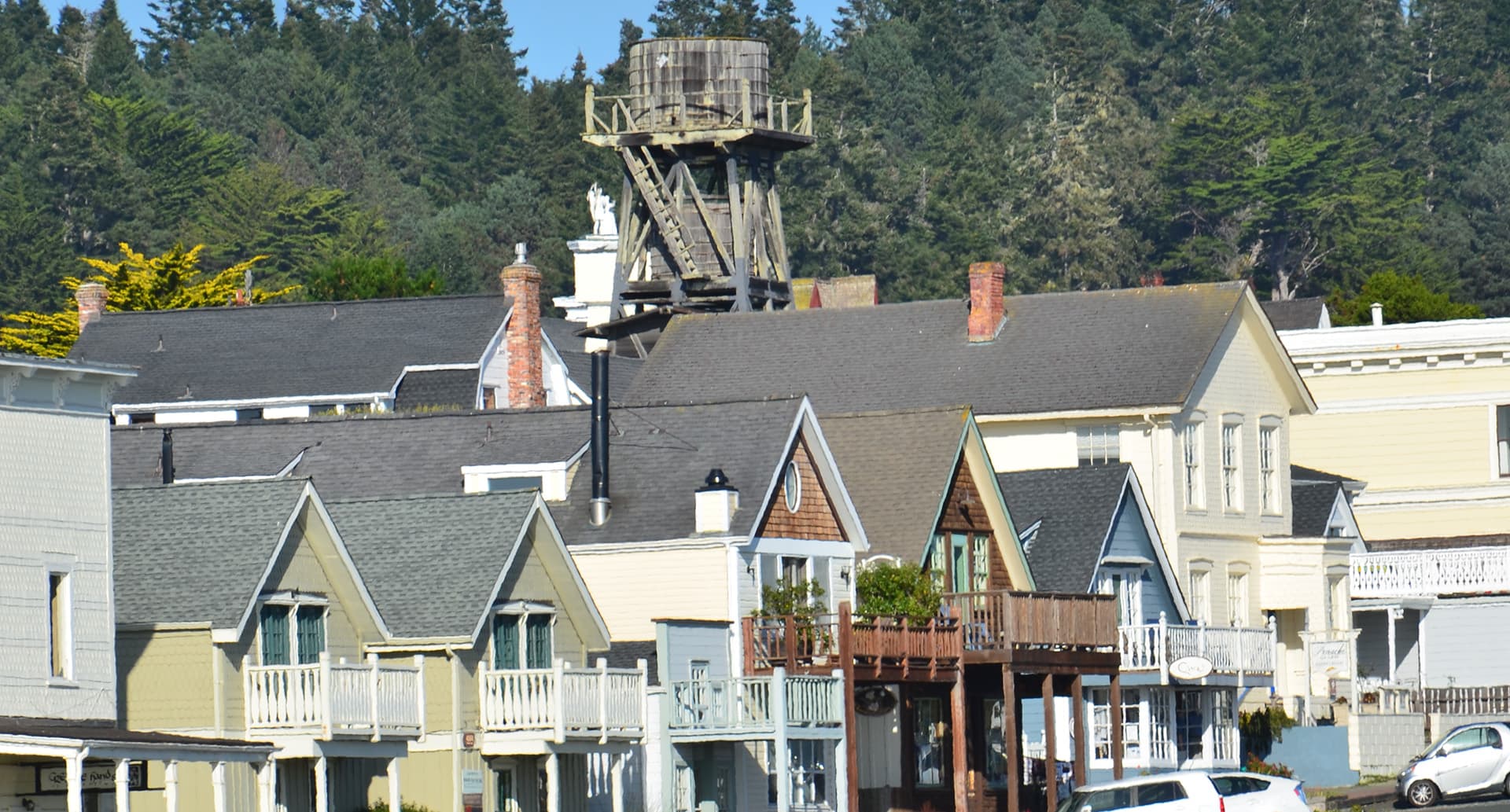
The questions I get the most during guest check-in usually involve water towers.
- Why does Mendocino have so many water towers?
- What are water towers used for?
- How did they get the water to the tank?
 When Mendocino was established as a logging town in the mid 1850’s, the settlers needed fresh water for drinking, livestock and gardening. As the mill town grew, it needed water for fire suppression too. The brackish river was unsuitable for drinking and there were no running streams to obtain fresh water. The only available water source they had was ground water.
The town of Mendocino sits atop an uncontained aquifer. Basically, it’s a leaky reservoir and weeps out of the rocks close to the ocean. The first settlers dug wells to reach the water. The soil is loamy and wells were prone to collapse, so the first wells were quite shallow. The water table was highly dependent on rainwater, so a shallow well could become unstable and go dry (it still happens today). Water seeps into the well from the surrounding soil. A few buckets of water were all they needed, at first.
Even back in the 1850’s, drought was always a worry. Rainwater collecting underground would pressurize the aquifer, raising it closer to the surface. In drier winters with less rainfall, a shallow well would run dry. Wells could also run dry because the bedrock was too close to the surface.
As the town grew, the number of wells increased. The mill needed water for steam boilers too. The mill attracted tree fellers, millers and carpenters from the New England area due to their experience with large trees. As the young mill town grew in size, houses, hotels and businesses were built from the local redwood and heated with scrap mill wood. Candles and lamps provided additional light. The danger of fires grew as the town expanded and water became a highly valuable resource. But there was nowhere to store water. With the abundance of redwood, water towers made from the sturdy, rot resistant redwood started popping up all over town.
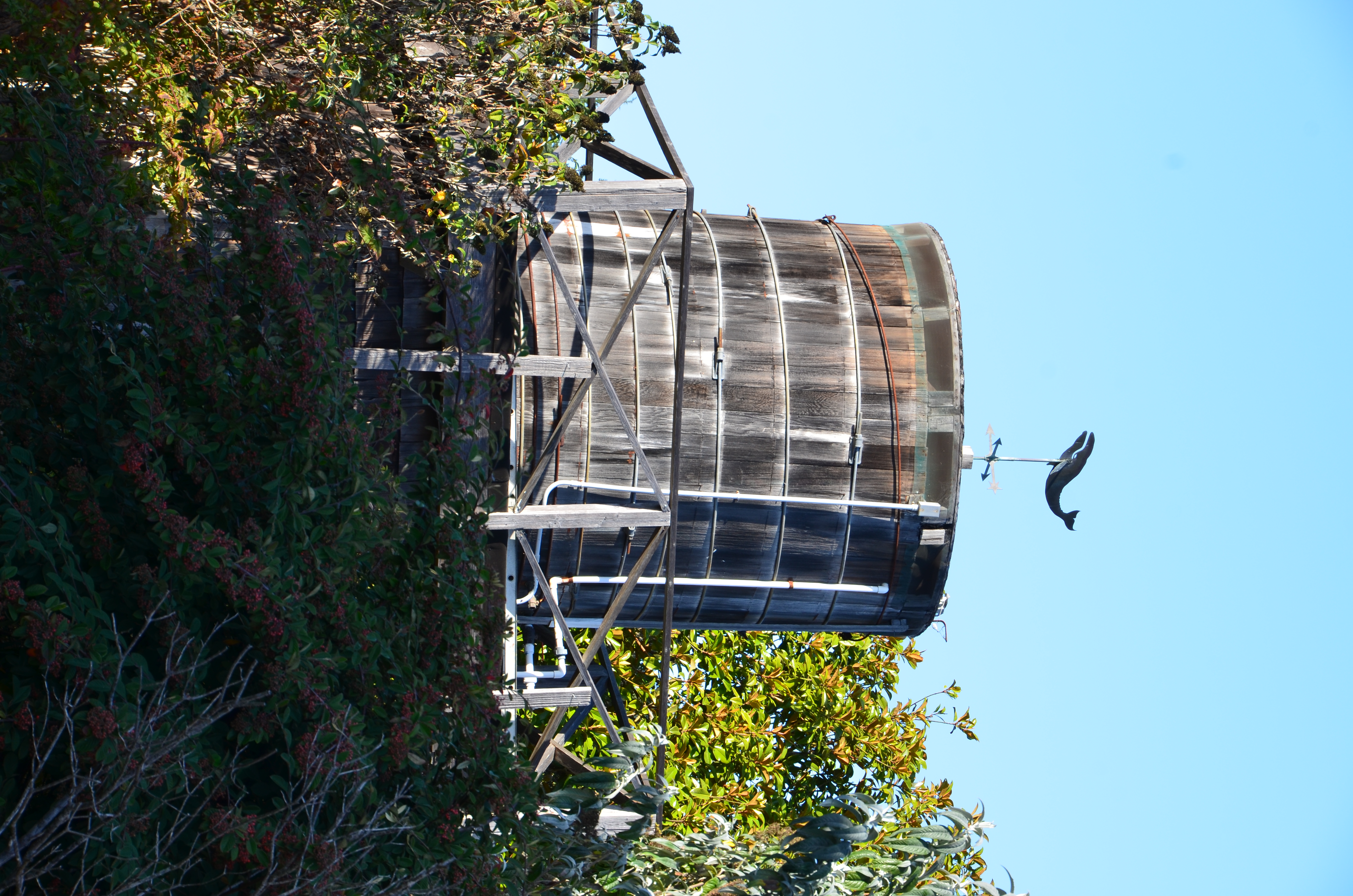
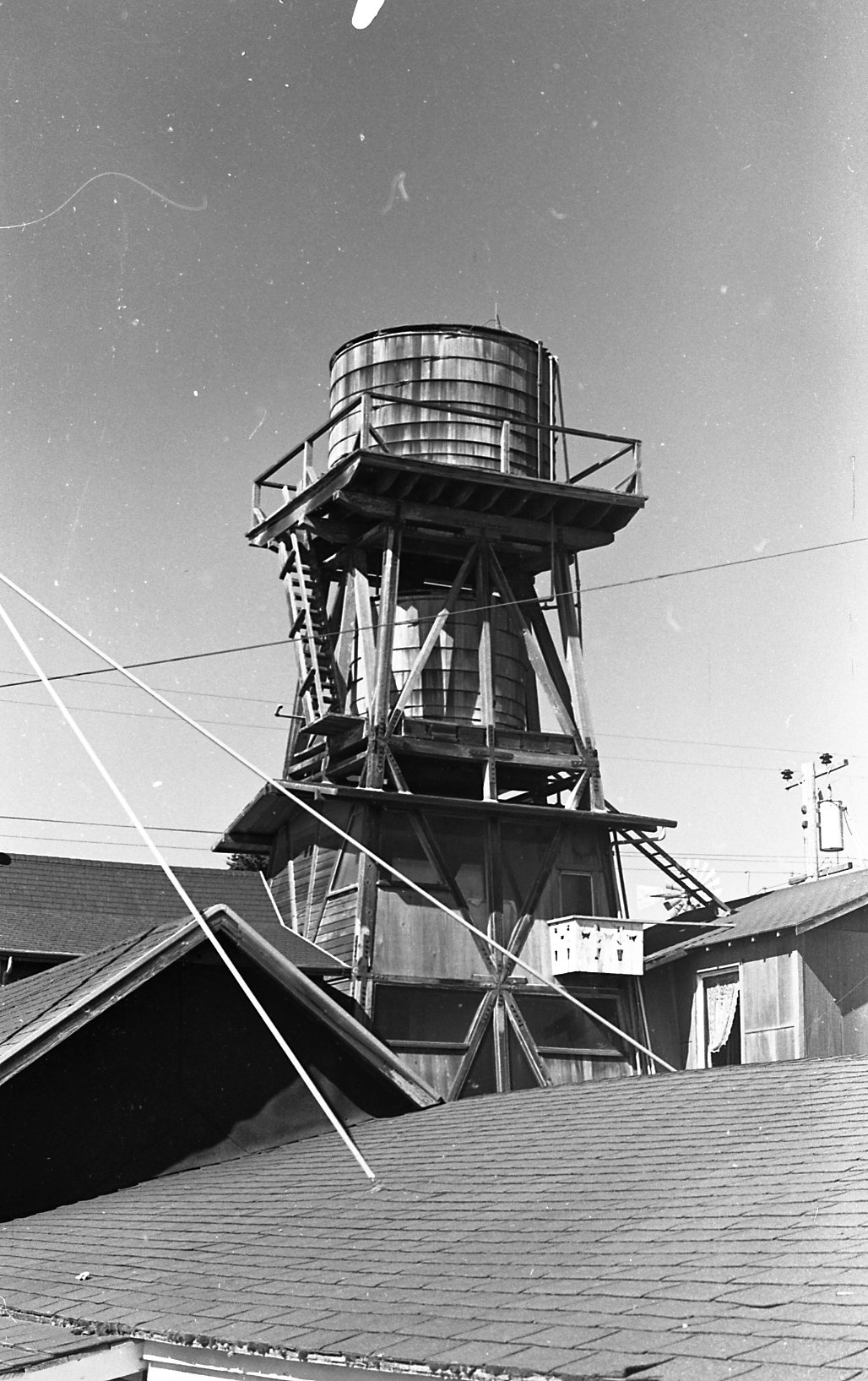
A water tower was not a new invention, and Mendocino’s geology made it a perfect fit for their needs. Tanks made from redwood were placed on top of the tower to store the precious commodity. A wind mill was used to pump the well water up to the tank. A gallon of water weighs about 8 pounds so the towers were built with a wide base to help distribute the heavy load. Built with redwood at an upward 7-degree angle, the base was both strong and durable in the coastal environment. Water storage tanks were also made from redwood using grade ‘A’ heartwood for its ability to resist decay/rot and its natural water resistance.
Putting the tanks on a tower provided another benefit, water pressure. One foot of elevation achieves 0.43 PSI or pressure per square inch. The higher the tank, the greater the pressure. A 30-foot water tower could deliver 13 PSI. This was enough pressure to move water a great distance.
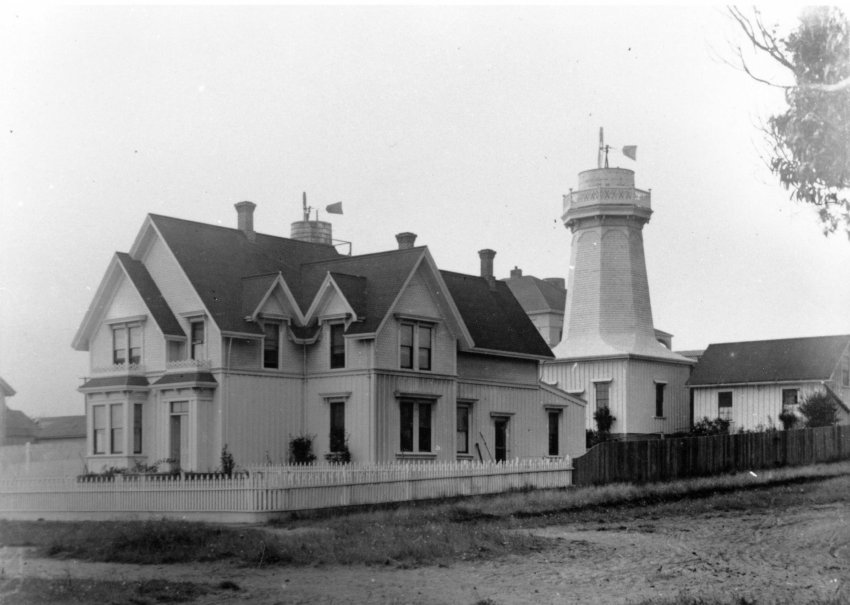 Some water towers still function as originally intended. The windmills have been replaced with electric pumps and pressurizing tanks replace the need to store tanks atop the tower structure. Redwood tanks would eventually leak and become unstable. Today most redwood tanks hide a poly tank wrapped by redwood planks to preserve the historical feel of our town.
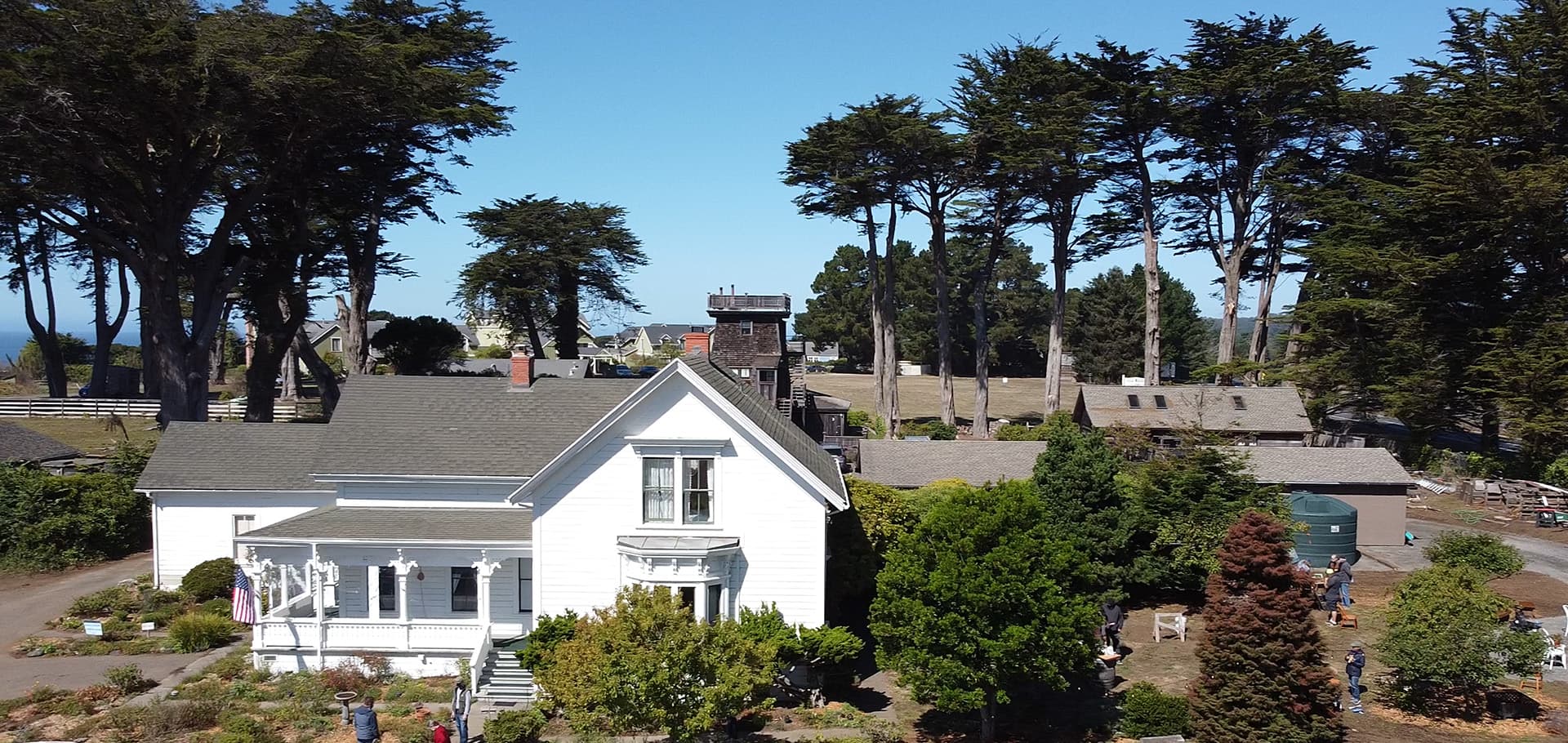
Our water tower sits on the exact spot where Joshua Grindle built a three-level water tower. With a tank on each level, it was capable of storing 25,000 gallons of water, which weighed 200,000 pounds when full. Overflow from the top tank would fill the lower tanks. The water was used for plumbing, gardening, farming and fed a 10,000-gallon tank across Little Lake Road for the local school (now the Community Center).
 While sifting through the items left by previous owners, I found a map of the water distribution used by Joshua. Quite old and tattered, it details how to turn the valves to get the water where it was needed.
Today, water is still a constrained resource. The entire village of Mendocino is still on wells, and the tanks you see around town are used the same way. Our downspouts are the water company. Shallow wells still run dry even in a very wet winter. In September 2021 with the help of our friends at Watershed Progressive, we installed a 5,000-gallon rainwater catchment tank to help water the garden and reduce well water use. Attached to a 500-sf roof, every inch of rain captures 300 gallons of water. Since installing the catchment system, we’ve distributed over 30,000 gallons to our garden.

Rain tank and wood shed roof. It takes about 16 inches of rain to completely fill the tank.
To see more historical photos from Mendocino, please visit the Kelley House Museum’s online archives.
A 16mm black-and-white and color, silent motion picture film of activities at the Caspar Lumber Co. The 525-feet single-reel film has a run time of 00:20:06 and wooden pipes can be seen being made starting at the 00:15:18 mark.

